
 Image 1 of 1
Superhéroes y la identidad cultural — Unit 1, Spanish 4
What do superheroes tell us about the cultures that create them? That's the question driving this 15-day Spanish 4 unit — and it turns out students have a lot to say about it.
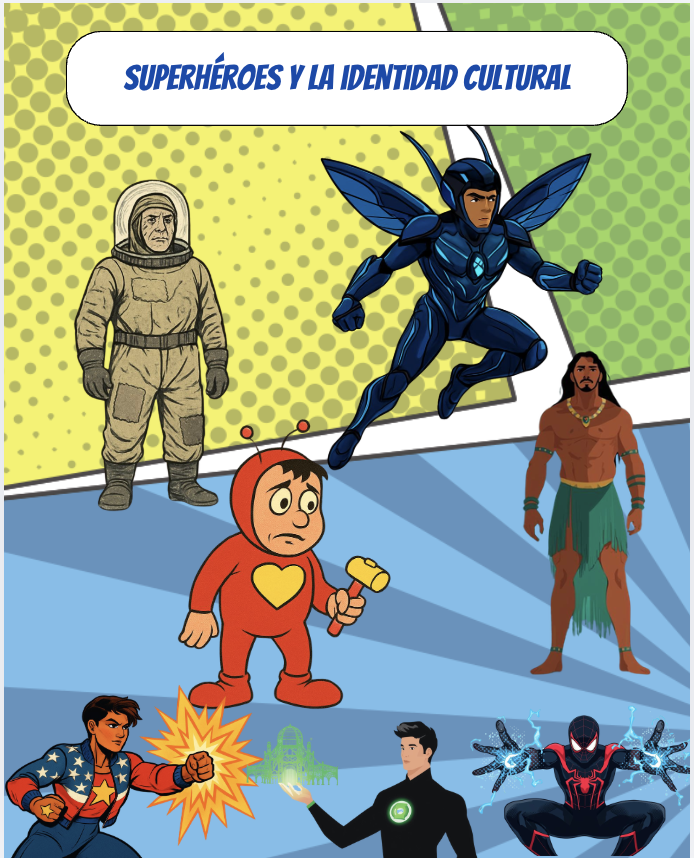
From El Chapulín Colorado to Blue Beetle to El Eternauta, this unit uses Latin American and Latino superhero figures as a lens for exploring cultural identity, representation, and values. Students read, discuss, argue, and write — in Spanish — about what it means for a culture to create a hero in its own image.
Grammar is woven throughout, not taught in isolation. Two key structures — one for expressing desires and expectations, one for talking about accumulated experience — appear constantly in readings, hero profiles, and class discussions. By the time students write their argumentative paragraph on Day 14, the forms feel familiar because students have encountered them in meaningful context dozens of times.
What's included:
55-slide unit presentation — drives every day of instruction
Grammar workbook — 20 structured activities with communicative discussion built in
Printables and source workbook — adapted articles (Fuente A + Fuente B), six first-person hero autobiographies, collaborative writing frame, essay planning sheet, and a 10-question content quiz
59 mini-cuentos illustration slips — print and cut, one per student
Teacher README — day-by-day guide with practical notes, print guide, source summaries, AP 2027 alignment, and repaso options
Best for: Spanish 4 / Intermediate-Low> High learners. AP-aligned (2027 CED).
Superhéroes y la identidad cultural — Unit 1, Spanish 4
What do superheroes tell us about the cultures that create them? That's the question driving this 15-day Spanish 4 unit — and it turns out students have a lot to say about it.
From El Chapulín Colorado to Blue Beetle to El Eternauta, this unit uses Latin American and Latino superhero figures as a lens for exploring cultural identity, representation, and values. Students read, discuss, argue, and write — in Spanish — about what it means for a culture to create a hero in its own image.
Grammar is woven throughout, not taught in isolation. Two key structures — one for expressing desires and expectations, one for talking about accumulated experience — appear constantly in readings, hero profiles, and class discussions. By the time students write their argumentative paragraph on Day 14, the forms feel familiar because students have encountered them in meaningful context dozens of times.
What's included:
55-slide unit presentation — drives every day of instruction
Grammar workbook — 20 structured activities with communicative discussion built in
Printables and source workbook — adapted articles (Fuente A + Fuente B), six first-person hero autobiographies, collaborative writing frame, essay planning sheet, and a 10-question content quiz
59 mini-cuentos illustration slips — print and cut, one per student
Teacher README — day-by-day guide with practical notes, print guide, source summaries, AP 2027 alignment, and repaso options
Best for: Spanish 4 / Intermediate-Low> High learners. AP-aligned (2027 CED).