

Every few months, the advice pops up again: “Don’t adapt the text. Adapt the task.”
I understand exactly where it comes from. For years, language teachers were handed textbook dialogues that no person would ever actually read. The authentic resources movement was a necessary reaction to that. We want students interacting with real language, real culture, and real ideas.
But a few years ago, I started noticing a disconnect in my own room. I was taking the advice to heart: handing students an authentic resource and heavily scaffolding the task I asked them to do with it. But it wasn’t working the way I hoped.
I’ve been thinking a lot about the phrase adapt the task, not the text. I don’t think it is wrong, but I am wondering if it’s slightly out of order. Task adaptation assumes the text already sits somewhere within the learner’s reach. You can simplify what you ask students to do endlessly, but if the text itself is miles past where they can construct meaning, the task can still be overwhelming.
So, lately, I’ve been experimenting with a different sequence: adapting the text first, and then adapting the task.
Observing the Gap
Picture handing a novice learner a newspaper article. We might tell them, “You don’t need to understand every word,” and then ask for a simple summary.
When I did this, I realized the message my students actually internalized was often the exact opposite. Many walked away convinced they were just bad at the language, when the truth was much simpler: I had asked them to engage with something past their current proficiency. Novices recognize words and phrases. Intermediates start connecting ideas. Advanced learners interpret and analyze. When I was handing all three the same text, it made sense that the results were wildly different.
Building the Bridge
I don’t modify texts because I dislike authentic resources. I do it because I’ve realized how gradual the learning process really is for my students.
Now, when I find an article, infographic, or video I want my class to engage with, I start by asking: What language will they need in order to interact with this resource later?
Then, I try to build a bridge toward it. Sometimes an infographic becomes a dialogue. Sometimes an article becomes a simplified reading. Sometimes a video becomes a shared reading. The goal is never to replace the authentic resource, but rather to prepare them for it.
Flooding the Form
When we talk about adaptation, it’s easy to picture just swapping hard words for easy ones. But I’m finding that is just a small piece of the puzzle.
The real work seems to be identifying the language students will need when they reach the authentic resource, and then flooding them with it. And I mean a specific kind of flooding: not just topical vocabulary, but the form.
If my students will eventually need to recommend solutions to a social problem, I try to saturate the texts they read with the structure that makes recommendations. We see it across a shared reading, individual readings, and activities until that form is familiar long before anyone officially names it. If they’ll eventually weigh competing perspectives, I flood the input with the language of opinion and support.
The point isn’t necessarily that the words get easier. It’s that the form they’ll need shows up so often, in so many contexts, that it stops feeling abstract.
The Case for a Complete Glossary
When my students read adapted texts, I give them a complete glossary for the text. The glossary is not a vocabulary list for students to memorize. Its a reference sheet for them so they can read with a little more fluency.
I do this because I’ve seen how quickly a single unknown word can stop the reading cold, and I really just want them to read. When a student hits an unknown word, I don’t want them freezing every ten seconds to look it up, or quietly giving up three paragraphs in. I want them constructing meaning.
For my classroom, the glossary removes the obstacle so comprehension can actually happen. Support seems to be how learners get enough successful reading experiences to keep reading.
Fading the Support
Eventually, the authentic text comes back. I take away the text supports: he flooding, the glosses, the smoothed sentences. Students meet the real thing on its own terms.
But notice what stays: the task support. This is where adapt the task, not the text finally comes into play for me, at the end. The authentic resource stays exactly as its author wrote it, and I scaffold what I ask students to do with it.
It helps me to think of text support and task support as two separate dials. Across a unit, I slowly turn the text dial from full down to zero, but the task dial stays engaged the whole way.
By the time we get to the unadapted text, students aren’t meeting the topic cold. They’ve already encountered the key ideas, processed the language, and built the background knowledge. The authentic resource becomes evidence of learning, and they get to discover that they understand far more than they could have a few weeks earlier.
In Spanish 4, maybe I give them an AP reading style test and allow them to use the authentic resource. Or when students write at the end of a unit, they can use the authentic resources while they write.
A Progression, Not a Choice
I’m trying to move away from seeing this as a choice between adapted texts or authentic texts. In my room, it works better as a progression:
Modified authentic text → Supported reading → Authentic text and engagement
Running alongside it is the task, doing the heavy lifting at the end once the text supports are gone. The modified text is never the destination; it is just the bridge. And if that bridge carries students to authentic language with confidence instead of frustration, it is doing exactly what it needs to do.
Examples
Here is an authentic infographic from Roy Gallardo Monos, and an adapted text I made for level 1 students to read BEFORE showing them the infographic.

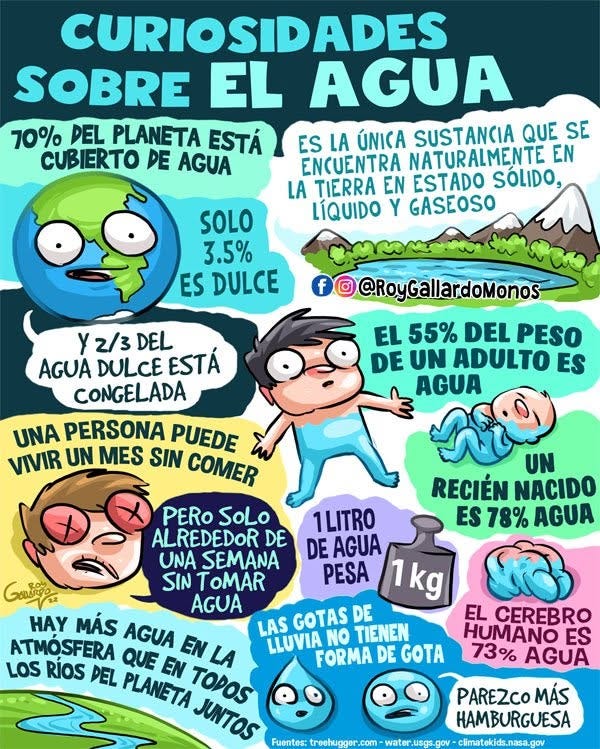
Here is an example from the Convivencia con Animales unit (Curently free on TPT) that will appear in a revision of the unit at some point.
Authentic article: https://dossierpolitico.com/2024/11/15/vaquita-marina-un-tesoro-mexicano-en-peligro/